The Error Chain: Understanding Aviation Accidents
Learn about the error chain concept in aviation safety through the detailed case study of the Air India Express Kozhikode accident on 07 August 2020. Discover the 11 critical links that form accident chains.
THE ERROR CHAIN
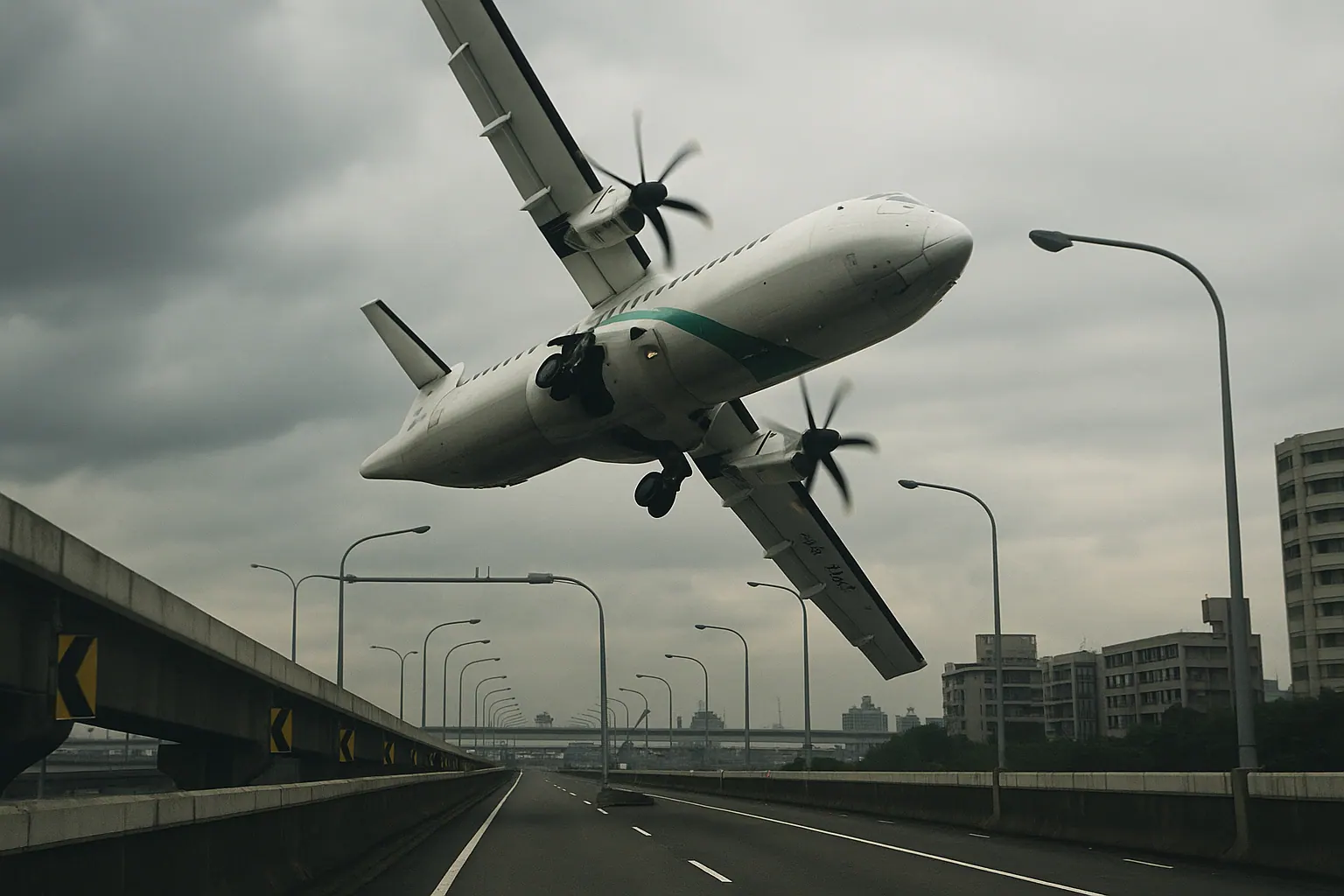
Aviation accidents are rarely caused by a single mistake, but accidents happen due to a series of errors which join together to create a "chain," called an "error chain". The contributing factors in an error chain are often linked to human performance, such as inadequate risk assessment resulting in poor decision making, poor communication, lack of situational awareness or the required knowledge to deal with the situation.
To prevent accidents and for flight safety it is essential to identify and break these links of error chains. This can be done by recognizing potential errors early on, implementing standard procedures to minimise risks, and promoting a culture of open communication and safety awareness.
KOZHIKODE ACCIDENT ON 07 AUGUST 2020
To get a better understanding of the "error chain" let us take the case study of Air India Express (AXB 1344) accident of Boeing 737-800 aircraft, on 07 August 2020 while landing on Kozhikode Runway 10. The flight departed from Dubai for Kozhikode at 1530 IST carrying 184 passengers and six crew members. At Kozhikode, Runway 28 was in use with the wind velocity of 270⁰/14 kts and 2000m visibility in light rain. The Pilot in command (PIC) was the Pilot Flying (PF) and he decided to Land with 30⁰ Flaps and Auto-brake 'Medium' in the prevailing weather conditions. The PF was a highly experienced pilot who had 10848.50 hrs of total flying experience and was a Line Training Captain in the company.
During the approach briefing for runway 28, the PIC did not calculate or brief the Actual Landing Distance (ALD) required. During the last one year he had operated 36 flights in and out of Kozhikode and most landings were made in headwind conditions, wherein stopping the aircraft was easily achieved. This experience probably resulted in complacency and overconfidence that affected his decision making and Crew Resource Management.
On the first ILS approach for runway 28, a missed approach was carried out for not sighting the visual reference at the Decision altitude, due to low clouds, with the rain obscuring the windshield due to the unserviceability of the windshield wiper on the Captain's side. At that time another aircraft, Air India 425 from Kozhikode, requested runway 10 for departure, probably due to weather on take-off path for Runway 28. When the ATC asked the PIC of AXB 1344, if runway 10 was acceptable for landing with the reported tail winds of 10 Kt, the PIC accepted the runway change without discussing with the PM or considering the impact of tail wind on the landing distance or the weather conditions on finals for the runway, in short without careful deliberation. The ATC changed the Runway to 10 with tailwinds and the Captain of AXB 1344 initiated the Instrument approach for Runway 10. Once again, the landing distance for Runway 10 was not calculated for the prevailing weather conditions of tail wind and wet runway.
Soon AXB 1344 was established on ILS 10 with autopilot ON, the auto throttle remained engaged till touchdown. The reported visibility for landing of was 2000 m in light rain and 16 Kt of tailwinds as per the DFDR data.
At 794 ft (2.5 nm or 4.63 km from touchdown) the PF disengaged the Autopilot and flew the approach manually thereafter. As soon as the autopilot was disengaged the aircraft went 1.7 dots below the glide slope and the approach became unstable, possibly because the PF was looking out to establish visual reference for the runway and he was not flying the aircraft with reference to the FD bars which compounded the problem. However, with the visibility of 2000m there was no hope of establishing visual contact with the runway at 4.63 KM.
The Pilot Monitoring (PM) as well as the Ground Proximity Warning System (GPWS) made a call of 'Glide slope', indicating that the aircraft was below the desired glide path. The PIC acknowledged the deviation call, but he continued with the landing instead of initiating a 'missed approach' as per the SOP. The aircraft crossed the runway threshold at 92 ft, instead of 50 ft at a ground speed of 175 kts, against the planned speed of 150 kts.
Seconds before touchdown, the aircraft rate of descent (ROD) increased, and the PM made repeated calls of "Rate of Descent". The PF acknowledged the call, arrested the sink rate, increased the thrust to 83% resulting in an extended long float. Finally at around 10 ft, the PM gave a call to "Go Around" but the PF without responding to the call continued to land.
The aircraft touched down at 19:40:25 IST, approximately at 4,438 ft on 8,858 ft long runway, in light rain with tailwind component of 15 knots and a ground speed of 165 knots. On touchdown the PF resorted to manual braking, overriding autobrake selection and selected reverse thrust. Before the reversers could take effect, he momentarily stowed the thrust reversers and simultaneously reduced pressure on the brakes. This action was repeated twice. The action clearly suggests indecision, confused state of mind between stopping the aircraft or executing a go around. The aircraft could not be stopped on the runway. The aircraft overran runway 10 and the Runway End Safety Area (RESA) at a ground speed of 84 knots, broke the ILS antennae and the fence before falling down to a depth of 110 ft below the tabletop runway at a ground speed of 41 knots. Both Pilots and Nineteen passengers were fatally injured. Several passengers and cabin crew suffered serious to minor injuries in the accident.
So, what were the links of the "error chain" that led to the accident? These links are normally identifiable by means of 11 clues. Breaking any one link in the chain would break the error chain and prevent the mishap. Now let us look at the "error-chain" links of this accident against the recognised accident error links.
1. Violating Limitations or Minimum Operating Standards:
The PIC chose to land on Runway 10 with the tailwind exceeding 10 kts. The PIC landed on a wet runway with tailwind of 16 kts without calculating the Actual Landing Distance. The Actual Landing Distance required with autobrake 3, landing flap 30, 'MEDIUM' braking and actual tailwind of 16 kt, was 10730 feet against the runway length of 8,858 ft. Had the crew calculated the ALD, they would have broken the error chain by not accepting RW 10.
2. Incomplete Communications:
The PIC neither calculated the ALD for Runway 10 with the tailwind of 15 kts nor discussed with the PM before accepting the runway change.
3. Get-Home-itis:
The focus of attention on any one item of event to the exclusion of all others. The captain continued to land with an unstable approach and the aircraft crossed the runway threshold at 92 ft, instead of 50 ft at a ground speed of 175 kts, against the planned speed of 150 kts. Had the captain kept the autopilot engaged until the Decision altitude, there was a better chance of arriving on the threshold with stabilised parameters. The captain chose to continue to land with an unstable approach because a Go-around on the second approach would have warranted a diversion. Since the PF was rostered for a scheduled flight the following day, he was aware that other than himself there was no other captain to operate the flight. Any diversion of AXB 1344 flight would have placed the PF in FDTL and he would not have been available to operate the next day's flight. For the similar reason, the captain chose not to Go around, in spite of a firm call of "Go-around" by the Pilot Monitoring just before touchdown.
Serviceability of the windshield wiper was essential for landing in rain to remove the accumulation of water on the windscreen which otherwise obscures the required visibility for landing safely. The PF chose to land in spite of the unserviceable wiper on his side, violating the SOP, probably to be able to perform the scheduled flight next day from Kozhikode. Due to the unserviceable wiper on the captain's side, had the crew diverted to an alternate airfield with clear weather, as per the SOP, the "error-chain" would have been broken and averted the accident.
4. Fixation:
During the 'unstable' approach for runway 10, the PF disregarded the call 'of go around' from the PM during the extended flare just before the touchdown with the fixation to stabilise the approach and continued with an unsafe long landing while being totally unmindful of the situational awareness of touching down 4,438 ft up on 8,858 ft long runway.
5. Departure from Standard Operating Procedures:
The PF chose to opt for flap 30 instead of flap 40, resulting in the increase in landing distance, against the company SOP.
The PF opted for Auto brake 3 for landing, instead of "Autobrake MAX", against the company SOP, which increased the landing distance.
The PF landed with inoperative windshield wiper in rain instead of diverting to an alternate with clear weather violating the SOP.
The PM failed to take over controls to Go around when the PIC did not act on his call as per the rules. In case of an unstable approach, if the PIC fails to stabilise the approach and also fails to 'Go Around' on the Pilot Monitoring's call, the PM should take over controls and perform a missed approach. Had the PM executed the Go around the error chain would have been broken.
6. Ambiguity:
Ambiguity is when two or more independent sources do not agree. The PIC chose to continue the approach while the PM wanted to go around firstly, during the approach just below 794 ft due to unstable approach or later during an extended long flare when he gave a form call of "Go- around" but the PF continued to land which led to confusion and breakdown of teamwork in the cockpit.
7. Unresolved Discrepancies:
Failure to resolve conflicts of opinion, information, changes in conditions. The PIC continued to land in spite of a call of Go around just prior to touch down.
8. Confusion:
A sense of uncertainty and anxiety. The PIC vacillated between stopping the aircraft and going around as indicated by opening throttle before touch down, selecting and stowing the reverser twice after landing and releasing brakes, etc on the landing run.
The above seven clues formed the links to the error chain, breaking any one of the links would have averted the Air India Express 1344 accident.
Apart from the above links of the Kozhikode accident there are a few other links, identified after an in depth study and analysis as the most common errors, which link together to form the error-chain of most aircraft accidents, they are:
- No One Flying the Aircraft: No one monitoring the current state of progress of the flight.
- No One Looking Out of the Window: It is important to keep a lookout for other traffic in the terminal areas to avoid the threat of mid-air collision.
- Use of an Undocumented Procedure: To use a procedure in an abnormal or emergency situation that is not prescribed in approved flight manuals. Does the flight crew have a thorough understanding of the problem?
Presence of one or more of the 11 identified clues mentioned above is an indication that an error chain might be developing. Early recognition and elimination of the error chain links helps the crew to manage and better reduce the corresponding risk of an accident and ensure flight safety.
Keep reading