aviation safetyweather deviationflight planning
Hail Damage on Srinagar Flight on 21 May 2025
May 20253 min readCapt. TPS Gill
Analysis of an Airbus A-321 aircraft that suffered hail damage near Pathankot on a flight to Srinagar, examining the weather conditions, flight planning decisions, and safety considerations.
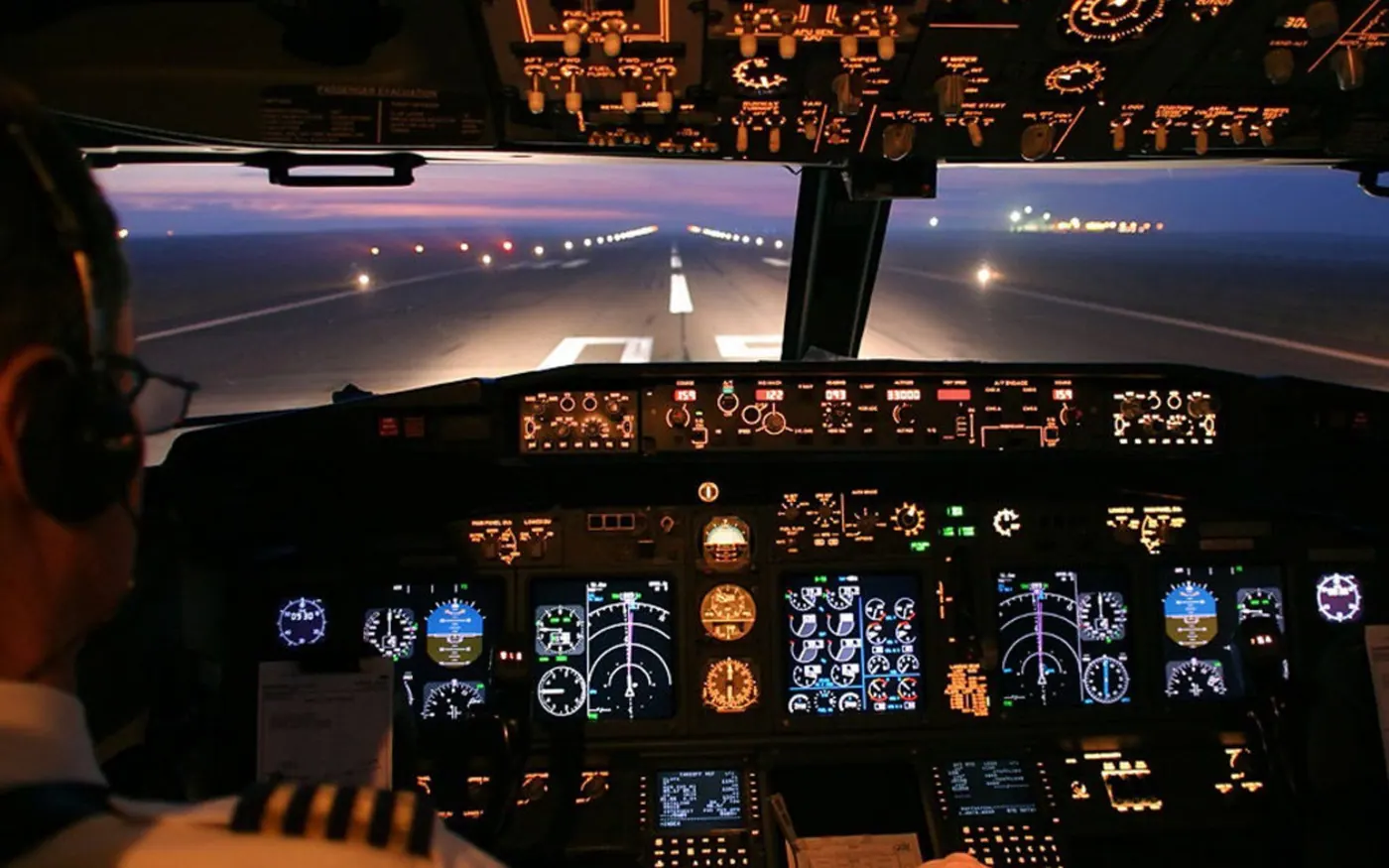
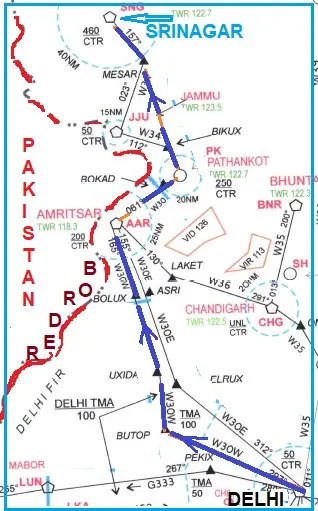
Recently an Airbus A-321 aircraft suffered hail damage near Pathankot on a flight to Srinagar for having flown through a thunderstorm cloud (Cumulonimbus or CB). Let us see the facts of the case. The route was 'W30W' DELHI – SRINAGAR VIA, AMRITSAR- PATHANKOT – MESAR SRINAGAR. The route to be flown was in the proximity of the International border (IB) of Pakistan. An aircraft is not to fly within 15 nautical miles (about 28 kilometers) of the Pakistan border unless an Airway passes within the boundary of the said limitation. Due to the recent conflict with Pakistan, their airspace was closed for Indian aircraft and notices had been issued, hence no concessions could have been expected for a deviation to the left of track.
The flight was in pre monsoon season, with the temperature rising up to 50⁰ c, with convective thunderstorms rising up to 50,000 ft, up draught and down draught ranging between 8,000 to 10,000 ft/ minute in the area were to be expected. Pre- flight weather charts (SIGMET) would have shown Thunderstorm clouds on the route. A meticulous study of the weather information by the crew, prior to the flight, ideally should have led to a precise plan for managing the flight under the weather conditions in the area. The following factors should have been considered under the prevailing circumstances.
Key Considerations:
In case of absence of permission for a right deviation, following options could have been exercised much before reaching a mindset of helplessness.
Weather Management Procedures:
For weather management in flight, as per standard operating procedure on Airbus A-321, the Pilot Flying selects 80 nm (about 150km) range for Airborne Weather Radar (AWR) display screen, for deviation decision making).
The Pilot Monitoring keeps AWR Range at 160nm (about 300km) for weather assessment and deviation planning from the route.
With the good use and analysis of AWR, weather deviation can be planned much in advance. The need for pre-flight preparation, knowledge of airspace restrictions and current notices, cannot be over emphasised for any flight.
One thing is very clear - going through a Thunderstorm, with up draught and down draught ranging between 8,000to 10,000 ft/ min in the cloud is never an option. No pilot should ever feel helpless in flight for lack of an option and feel compelled to fly through a Thunderstorm cloud, since the consequences can be disastrous as was experienced by Air France 447.
Flight route map showing the Delhi-Srinagar route via Amritsar-Pathankot-Mesar
The flight was in pre monsoon season, with the temperature rising up to 50⁰ c, with convective thunderstorms rising up to 50,000 ft, up draught and down draught ranging between 8,000 to 10,000 ft/ minute in the area were to be expected. Pre- flight weather charts (SIGMET) would have shown Thunderstorm clouds on the route. A meticulous study of the weather information by the crew, prior to the flight, ideally should have led to a precise plan for managing the flight under the weather conditions in the area. The following factors should have been considered under the prevailing circumstances.
Key Considerations:
- Plan for weather deviation and related procedures.
- Carriage of extra fuel to cater for additional track miles to be flown.
- Proximity of the International border of Pakistan with the limitation of not flying closer than 15 nautical miles closer to it.
- Closure of the Pakistan airspace (left of the route).
- Pathankot is about 20 kms from the IB, so a left deviation was not an option due to the proximity to the IB and also due to the closure of the Pak airspace
- Deviation to the right was not even considered by the crew as per the narrative. To the right of the route was the Restricted airspace due to operation of fighters from the IAF airfields. However, since the flight was at 36,000 feet, rarely if any, fighters would have been operating at that level for a routine flight. Since the controlling in the area was by the Northern radar, necessary separation would have been provided to the Airbus from any other aircraft operating in the vicinity by the same radar. Hence, a safe deviations to the right was certainly an option.
In case of absence of permission for a right deviation, following options could have been exercised much before reaching a mindset of helplessness.
- Return to Delhi.
- Diverting to alternate airfields which was clear of WX
- Carriage of extra fuel.
Weather Management Procedures:
For weather management in flight, as per standard operating procedure on Airbus A-321, the Pilot Flying selects 80 nm (about 150km) range for Airborne Weather Radar (AWR) display screen, for deviation decision making).
The Pilot Monitoring keeps AWR Range at 160nm (about 300km) for weather assessment and deviation planning from the route.
With the good use and analysis of AWR, weather deviation can be planned much in advance. The need for pre-flight preparation, knowledge of airspace restrictions and current notices, cannot be over emphasised for any flight.
One thing is very clear - going through a Thunderstorm, with up draught and down draught ranging between 8,000to 10,000 ft/ min in the cloud is never an option. No pilot should ever feel helpless in flight for lack of an option and feel compelled to fly through a Thunderstorm cloud, since the consequences can be disastrous as was experienced by Air France 447.
REMEMBER:
"FLYING IS DONE AT HOME" i.e. THOROUGH PRE-FLIGHT PREPARATION IS A MUST FOR THE CONDUCT OF A SAFE FLIGHT.
"FLYING IS DONE AT HOME" i.e. THOROUGH PRE-FLIGHT PREPARATION IS A MUST FOR THE CONDUCT OF A SAFE FLIGHT.
Keep reading